Jerry L. Prince
Overview
Vector tomography is the
reconstruction of vector fields - e.g., the velocity of fluid flow
or the displacement of a deformed object - from projections of
components of the field. Here, we consider the following
general projection measurement
which we call the inner product measurement or probe
transform of the
vector field (1) .
The effect of probe
is to convert the vector field into a scalar
by taking a point-by-point inner product. The resultant scalar field
is then integrated over planes as in the 3-D Radon transform. This
transformation generalizes a type of measurement equation that has
been studied in 2-D and almost exclusively in the context of acoustic
flow imaging using time-of-flight measurements - e.g., ultrasonic
imaging in medicine, flow imaging in nondestructive evaluation, and
ocean acoustic tomography.
The use of inner product measurements has several potential advantages in the imaging of vector fields. First, forming the inner product has the effect of performing a derivative on the measured data, normally the first step in numerical inversion. Thus, the measurement process itself performs an operation which is normally prone to numerical instability. Second, if a field is known to be either irrotational or solenoidal, then fewer measurements than are required to recover a general vector field may be used to recover just that component alone. This saves measurements and potentially reduces the effects of noise. Finally, some properties of the field, such as vorticity, can be calculated from a single component of the field. Thus, if such a property is desired, it may be found from a smaller number of measurements than would be required to reconstruct the full vector field.
Theory
According to Helmholtz's Theorem, a vector fieldAssuming that the probe only depends on orientation, leads to the following projection theorem
It follows from the projection theorem that the components
and
can be imaged separately. In particular, if
then since
the solenoidal component of the
field is invisible. The following formula can be established
In a similar fashion, we see from the projection theorem that the irrotational
part of the field is invisible if
is orthogonal to
.
Since the linear subspace orthogonal to
is two-dimensional, two
probes
and
can be selected which are linearly independent and orthogonal to
.
If
form a right-handed orthonormal basis, then
Simulations
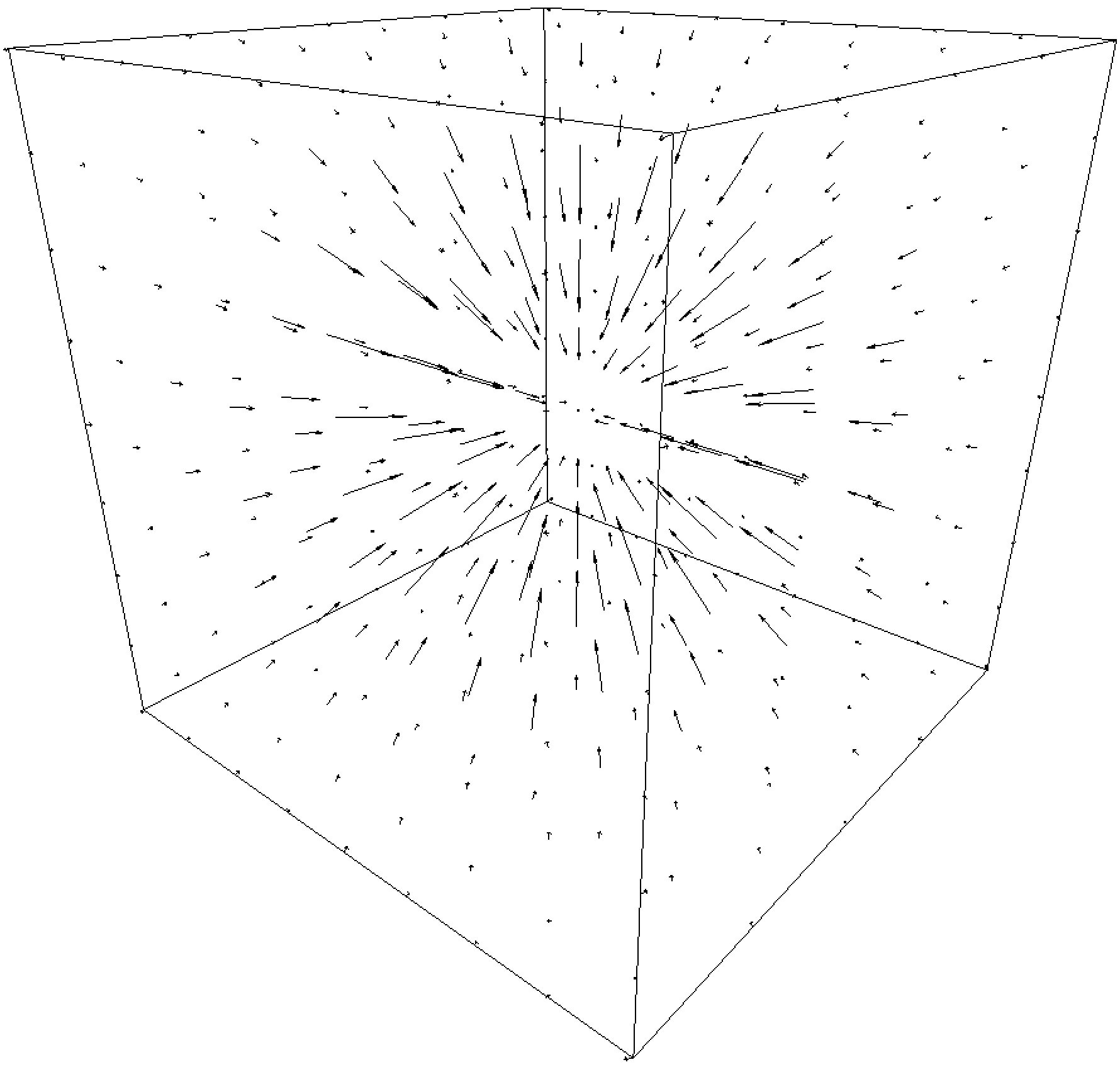
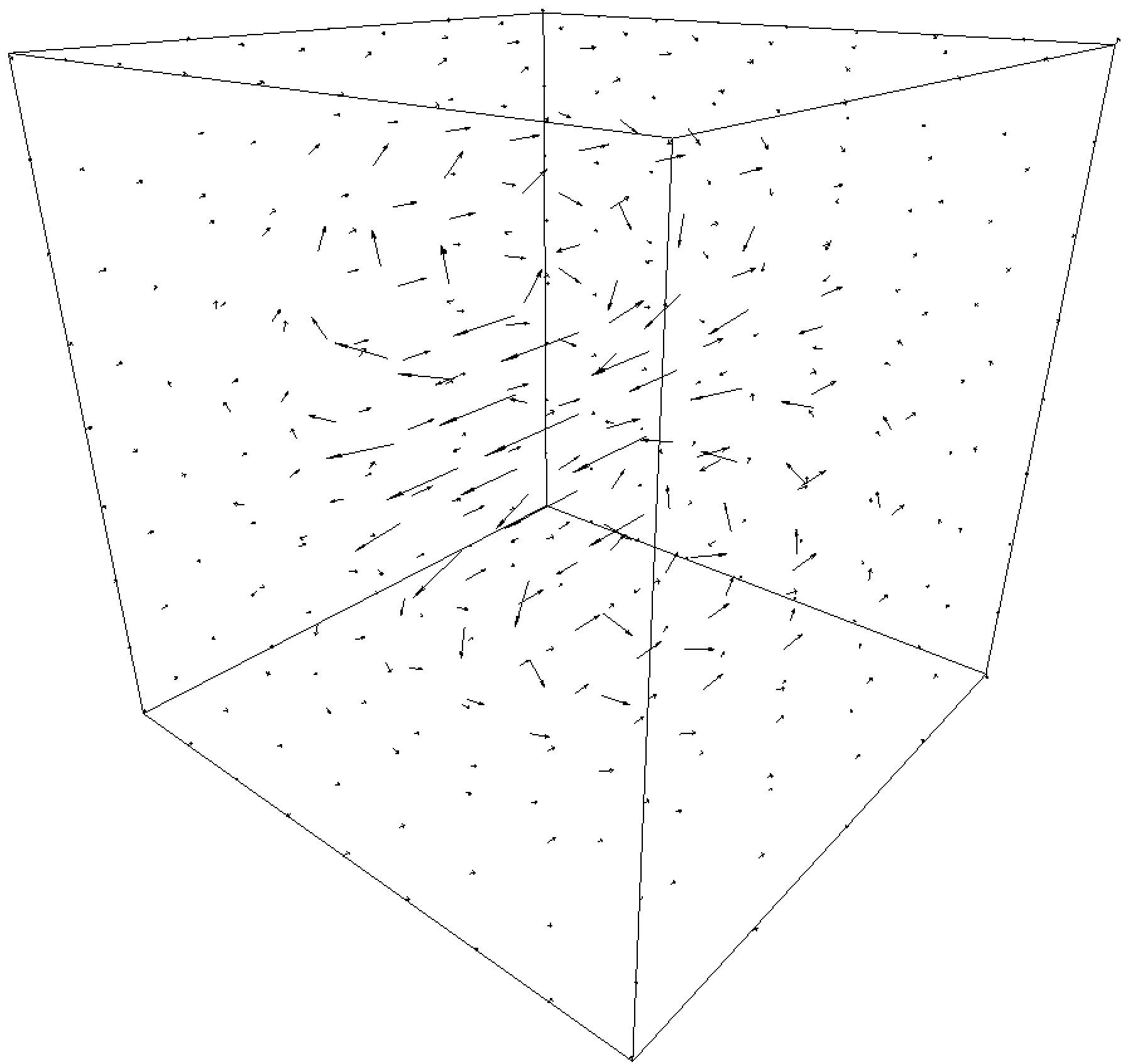
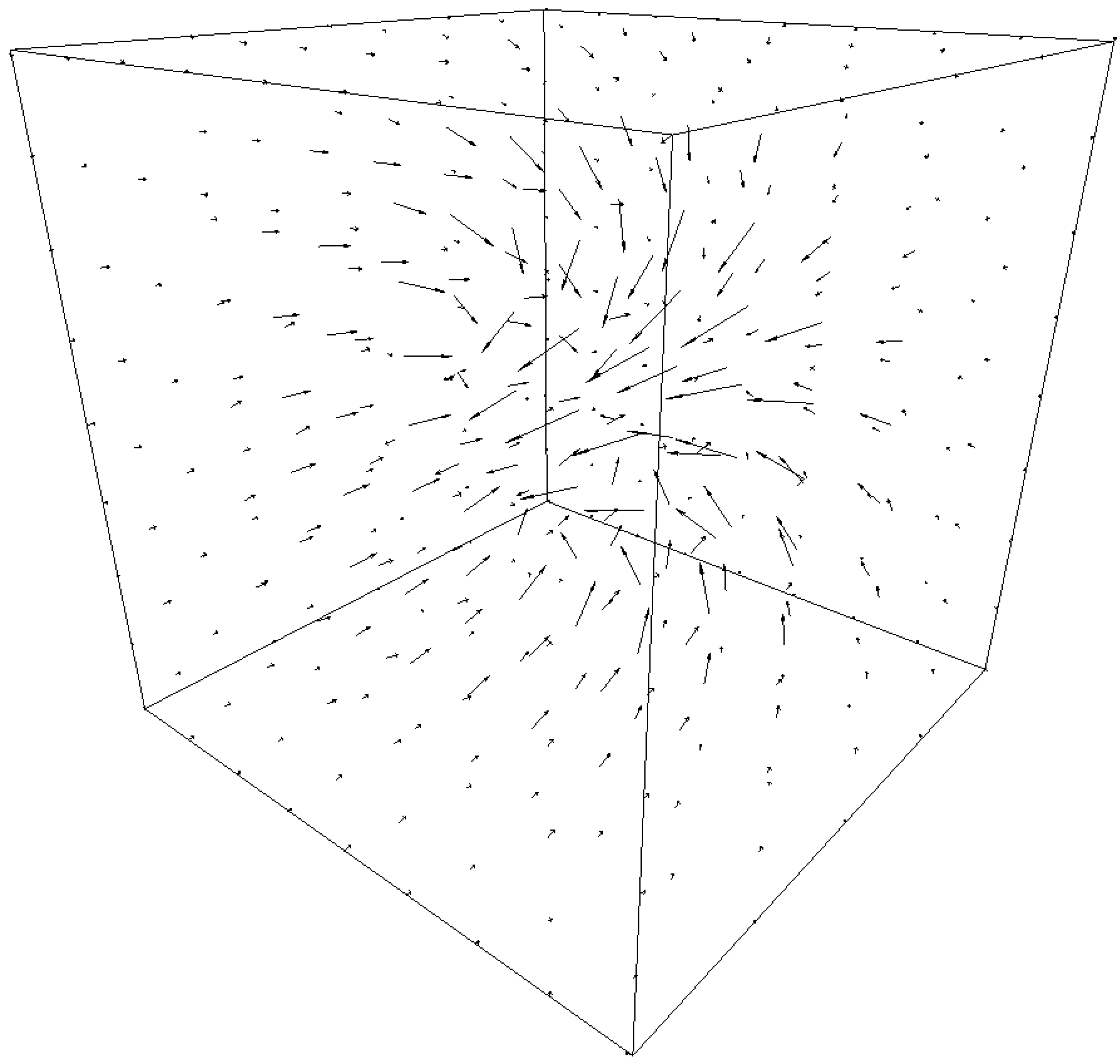
Three vector fields were defined on the unit cubewhere
Assigning
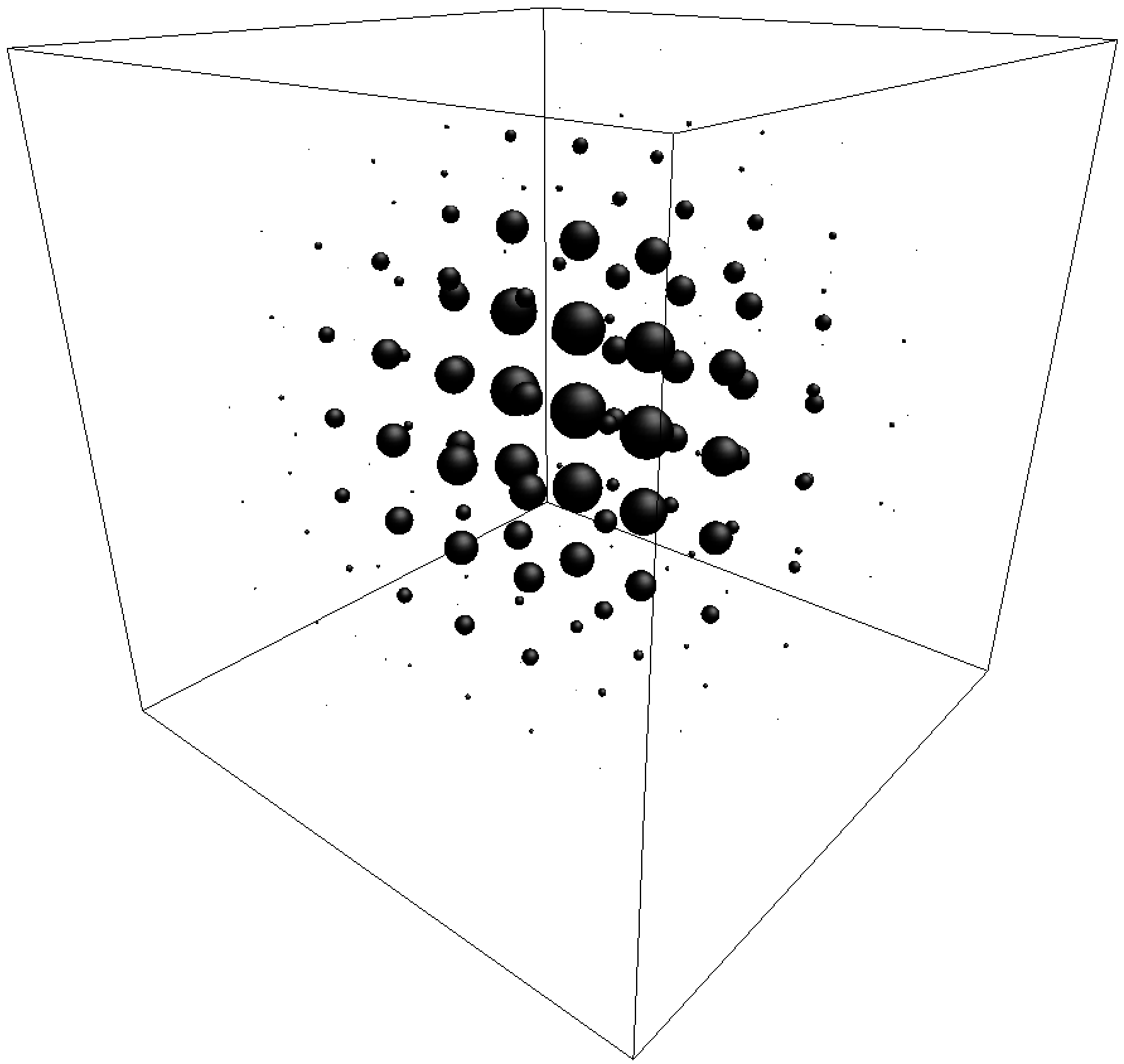
The original and reconstructed fields appear in the following figure.
| Original | Reconstruction | |
|---|---|---|
| Scalar Potential | 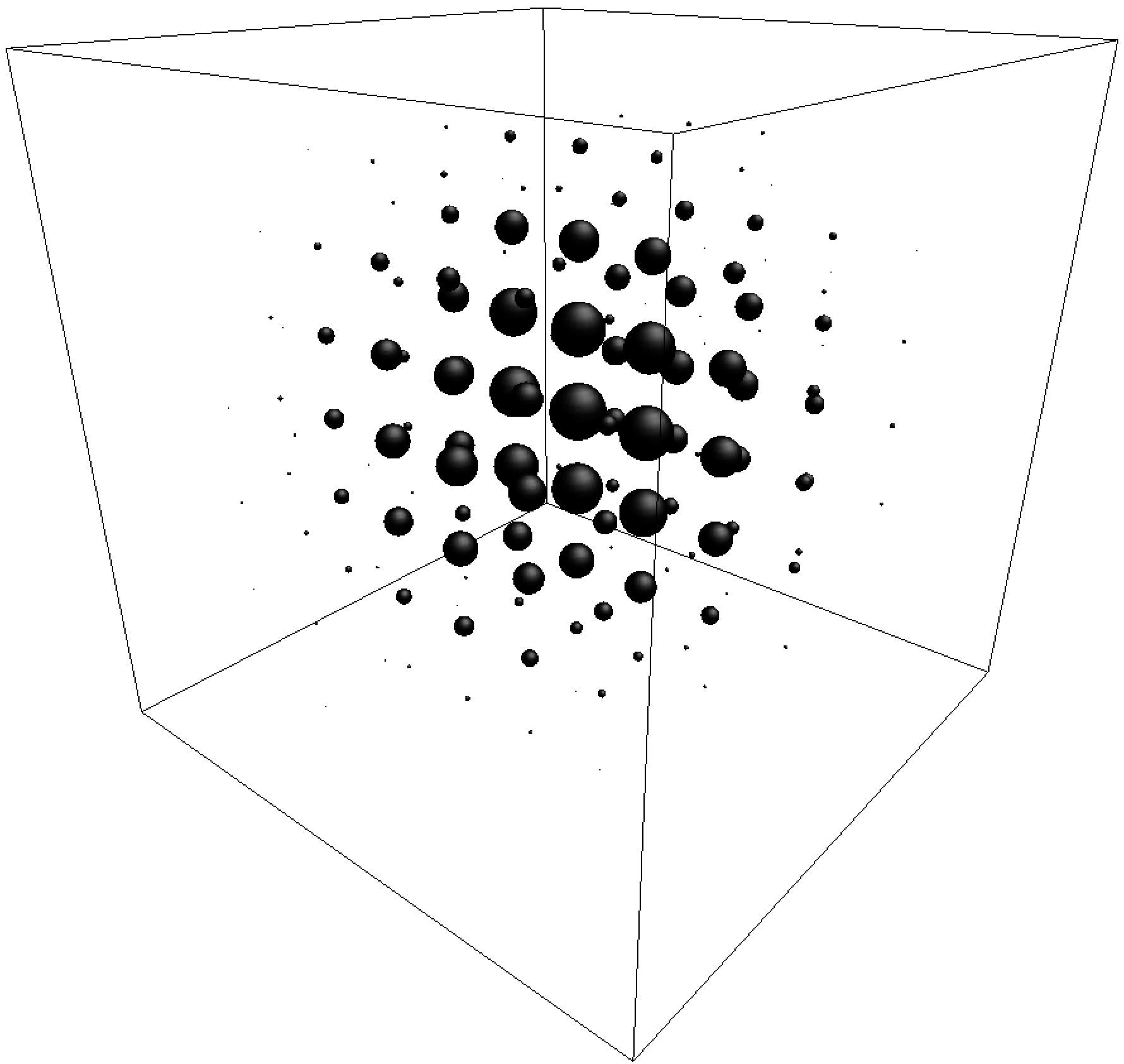 |
 |
| Vector Potential | 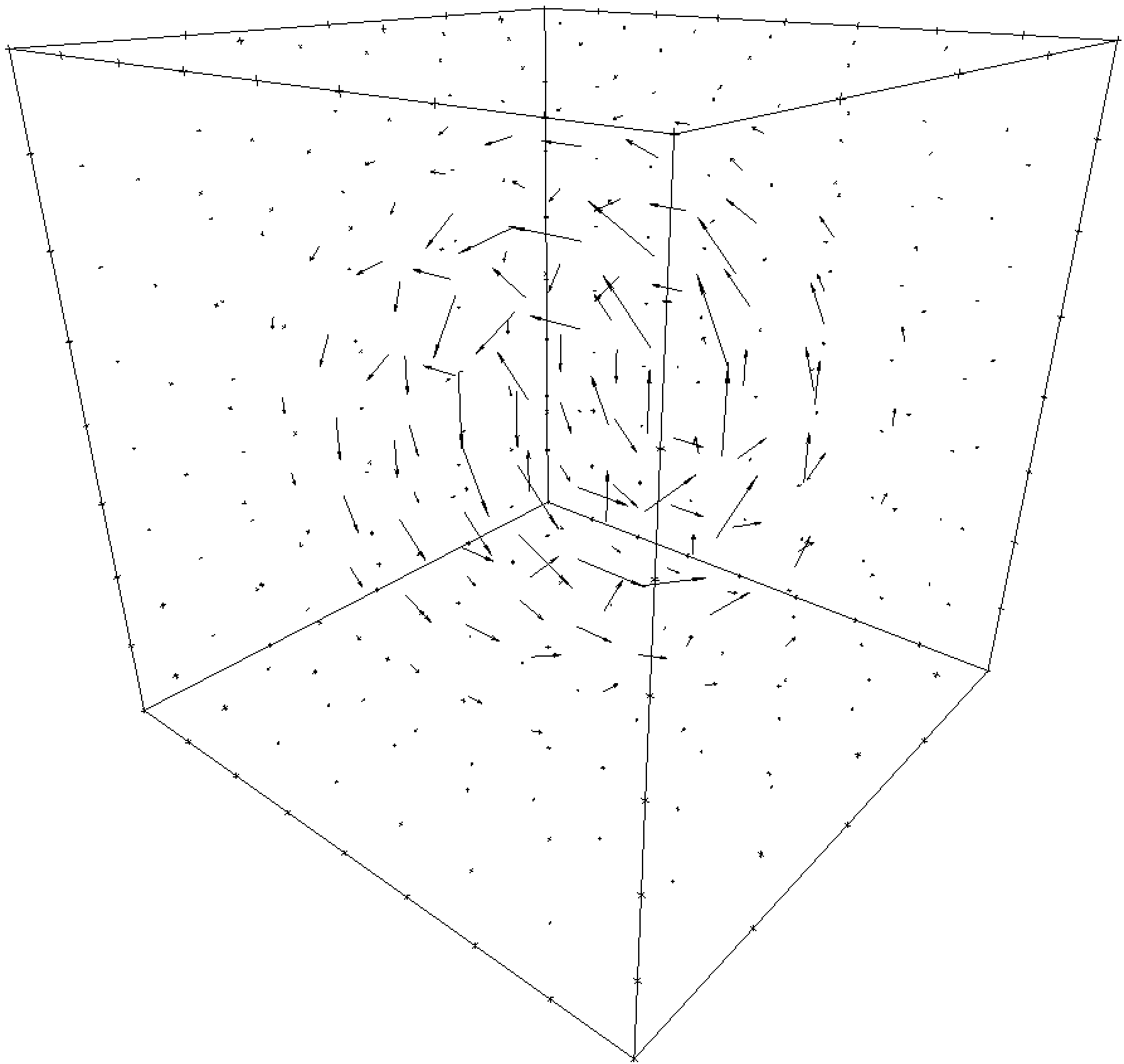 |
 |
| Irrotational Part | 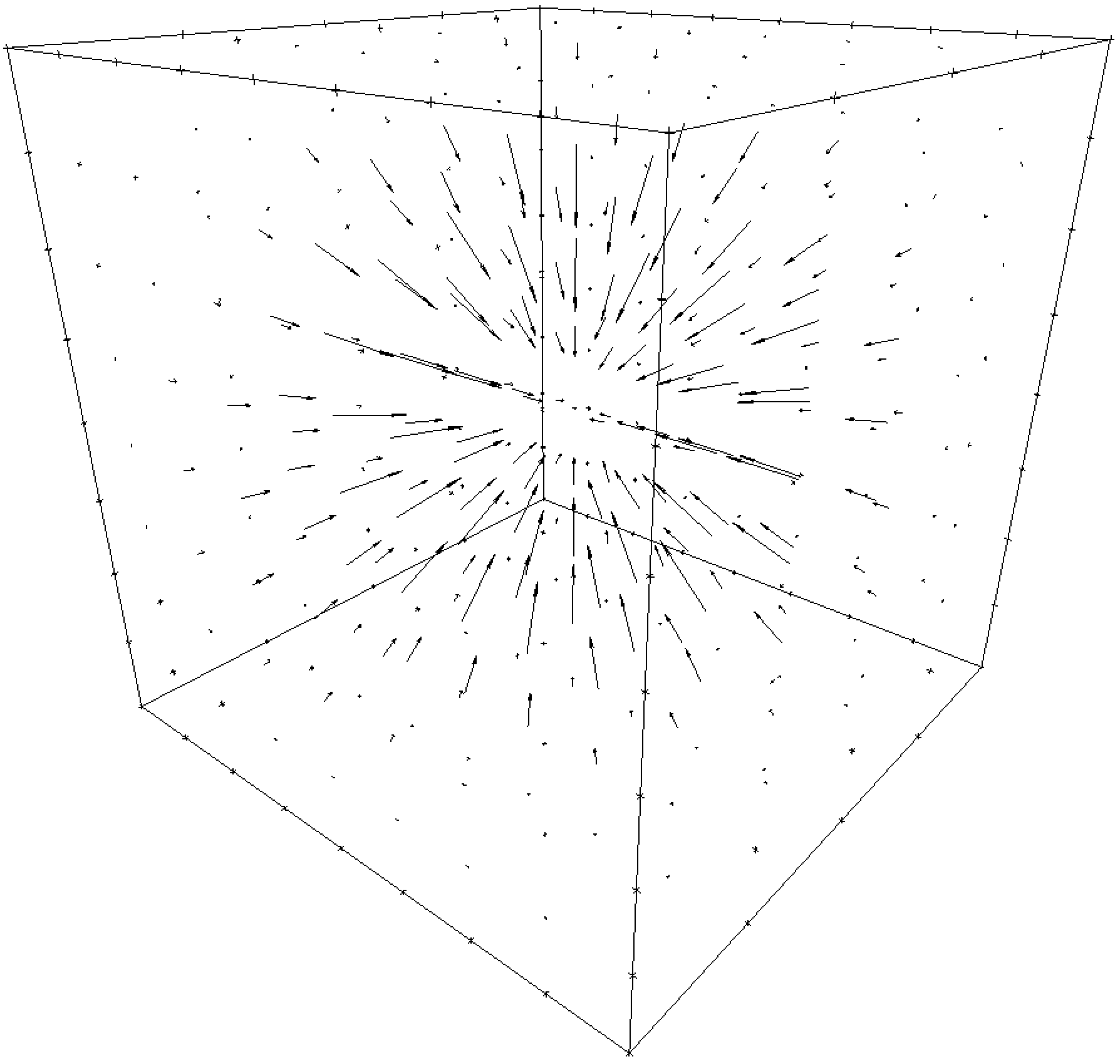 |
 |
| Solenoidal Part | 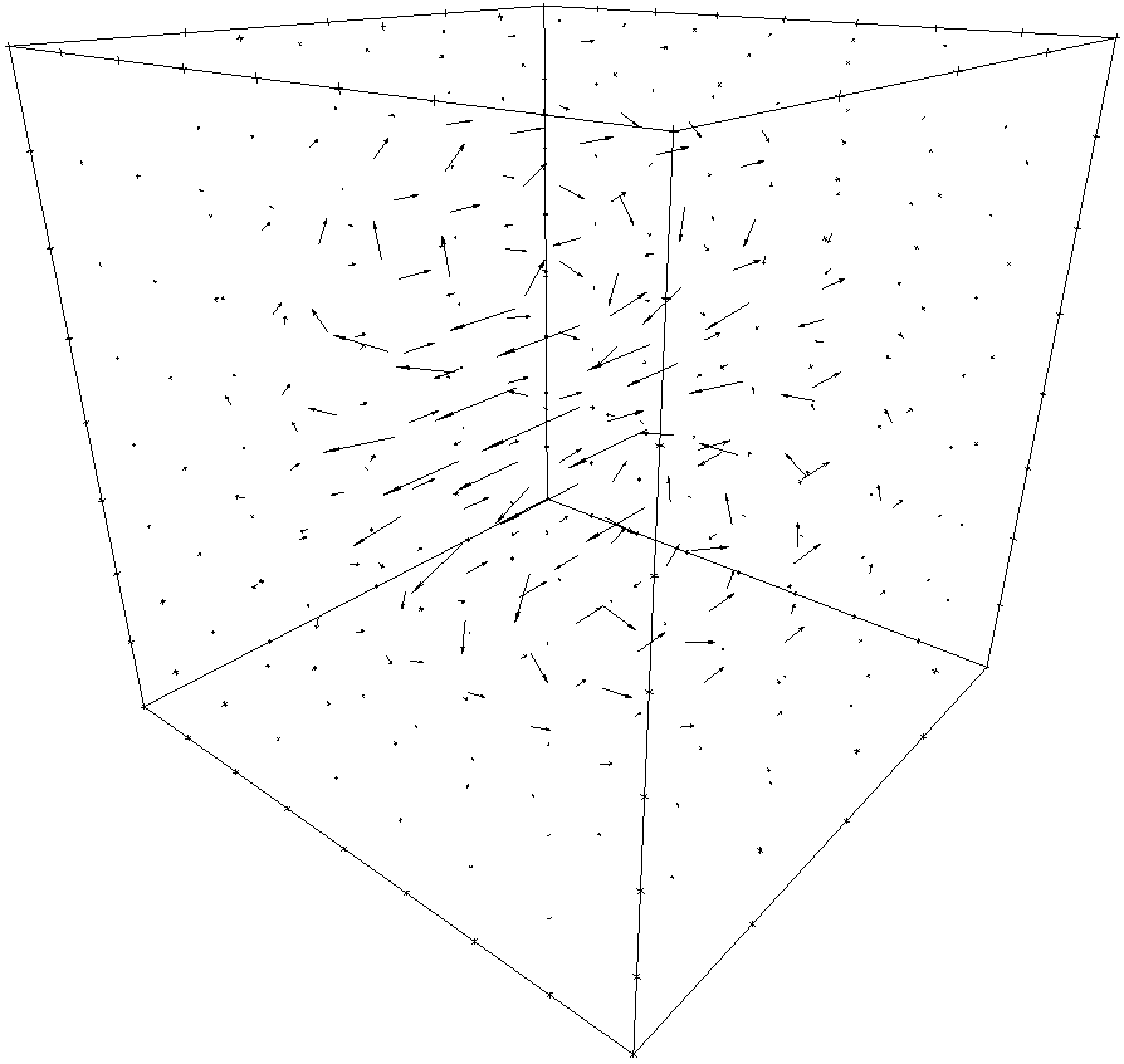 |
 |
| Whole Field | 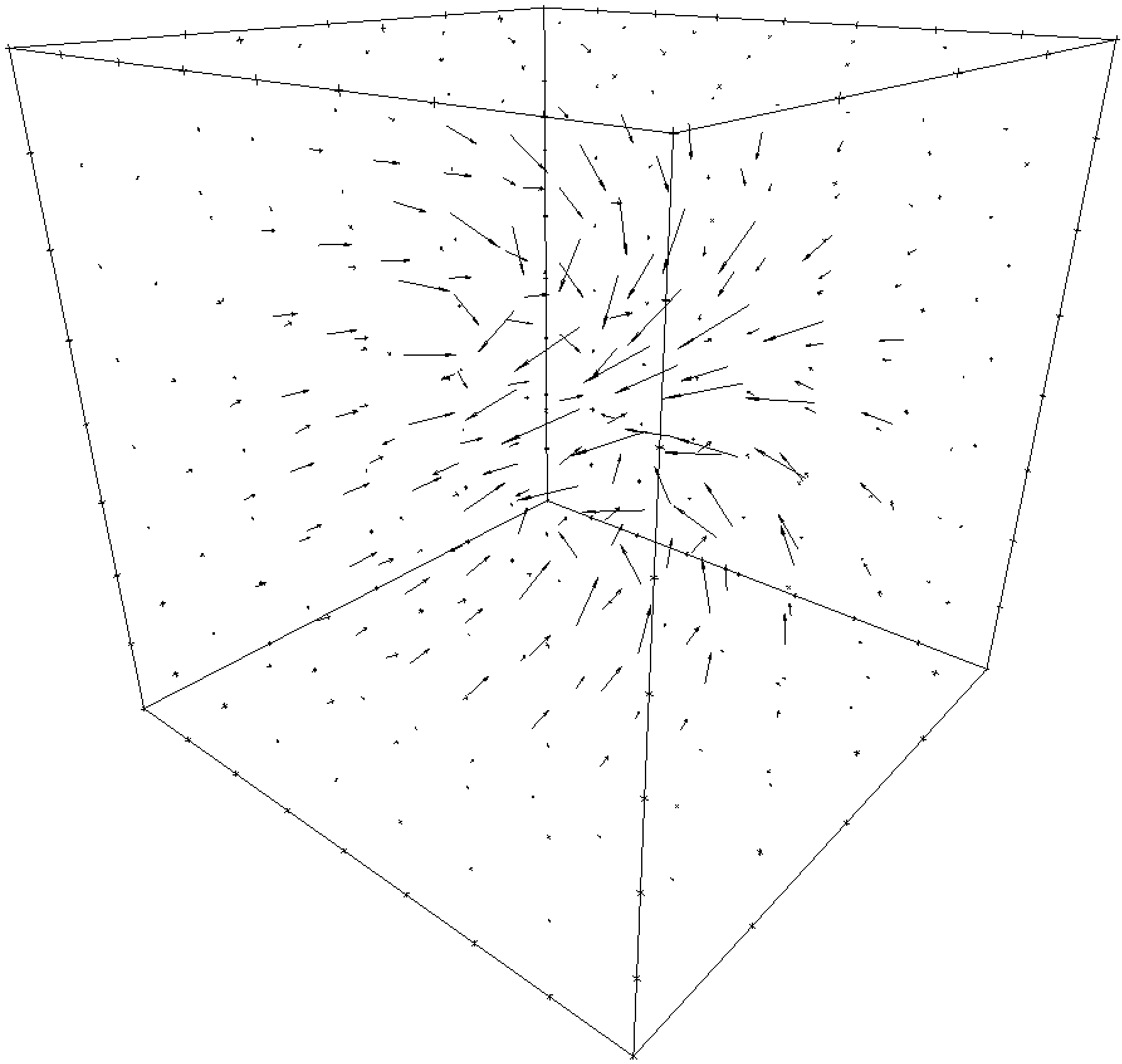 |
 |
Conclusion
This work provides a basic analogy between vector tomography and standard computed tomography through a projection theorem and convolution backprojection reconstruction formulas. In publications provided below, additional projection theorems and reconstruction formulas are provided, boundary conditions are addressed, and connections between vector tomography and magnetic resonance imaging are provided. Although the framework presented here used probes that form a right-handed frame, linear independence is all that is required, and field components can be reconstructed from fewer than three probes. These properties may allow the use of the probe transform formalism in new applications. Finally, the approach used to generate simulations in this work - i.e., synthetically scanning a discrete vector field and reconstructing the potentials or field components - represents (as far as we know) a completely new way to extract both potential functions and field components from a sampled vector field.Publications
- J. L. Prince, "Tomographic Reconstruction for 3-D Vector Fields," Proceedings of ICAASP93, IEEE #93CH3252-4, April 1993.
- J. L. Prince, "Tomographic Reconstruction of 3-D Vector Fields Using Inner Product Probes," IEEE Transactions on Image Processing, vol. 3. no. 2, pp. 216-219, March 1994.
- J. L. Prince, "A Convolution Backprojection Formula for Three-Dimensional Vector Tomography," Proceedings of the 1994 IEEE Int'l Conf. on Image Processing, vol. 2, pp. 820-824, November 1994.
- J. L. Prince, "Tomographic Imaging of Vector Fields," Invited Paper, OSA Spring Topical Meetings, Signal Recovery and Synthesis V, pp. 2-4, March 12-17, 1995
- J. L. Prince, "Convolution Backprojection Formulas for 3-D Vector Tomography with Application to MRI," IEEE Transactions on Image Processing, vol. 5, no. 10, pp. 1462-1472, October 1996.
- N. F. Osman and J. L. Prince, "Reconstructed Potential Functions in Bounded Domain Vector Tomography," Proc. Conf. Inf. Sci. Sys., The Johns Hopkins Univ., pp. 891-895, March 19-21, 1997.
- N. F. Osman and J. L. Prince, "Reconstruction of Vector Fields in Bounded Domain Vector Tomography," Proceedings of ICIP97, vol. 1, pp.476-479, Santa Barbara CA, Oct. 26-29, 1997.
- N. Osman and J. L. Prince, "3-D Vector Tomography on Bounded Domains," Inverse Problems, vol. 14, pp. 185-196, 1998.

